Novel imaging biomarker for detection of regional cardiovascular inflammation using Positron Emission Tomography (PET)

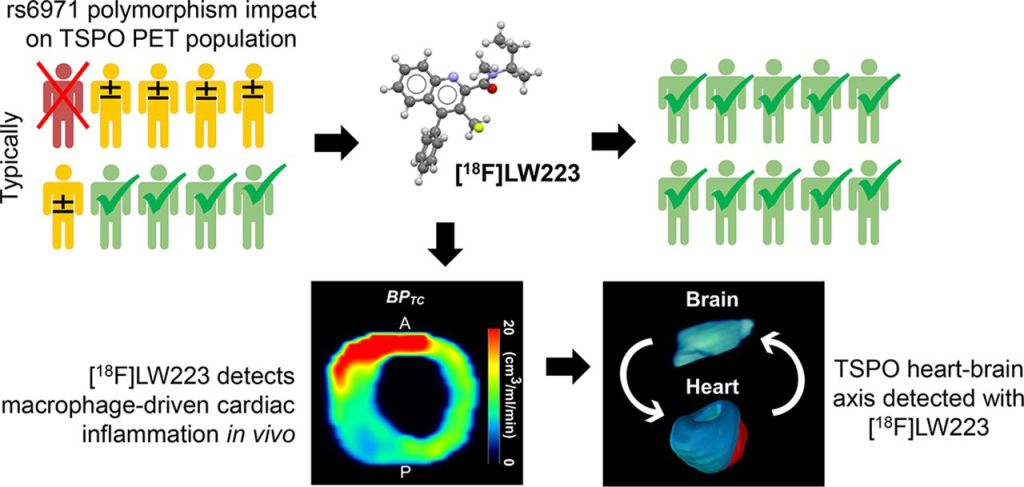
Inflammation plays a key role in a number of different pathologies throughout the body. In our group, we are interested in developing PET imaging approaches which will allow the non-invasive assessment of inflammation in a range of cardiovascular and neurological diseases. We are currently developing a PET radiotracer, [18F]LW223, which targets the widely studied inflammatory marker 18 kDa translocator protein (TSPO) without susceptibility to a single nucleotide polymorphism (rs6971) in TSPO gene. We are currently at the stage of validating the use of [18F]LW223 to image TSPO expression in health and its dynamics in myocardial infarction and dementia. Our research is primarily driven by findings obtained from studying small animal models, but we also aim to evaluate the translational potential of [18F]LW223 using well characterised post-mortem human tissues.
Outcomes of this research so far have been published HERE , HERE , HERE and HERE
13th August 2019
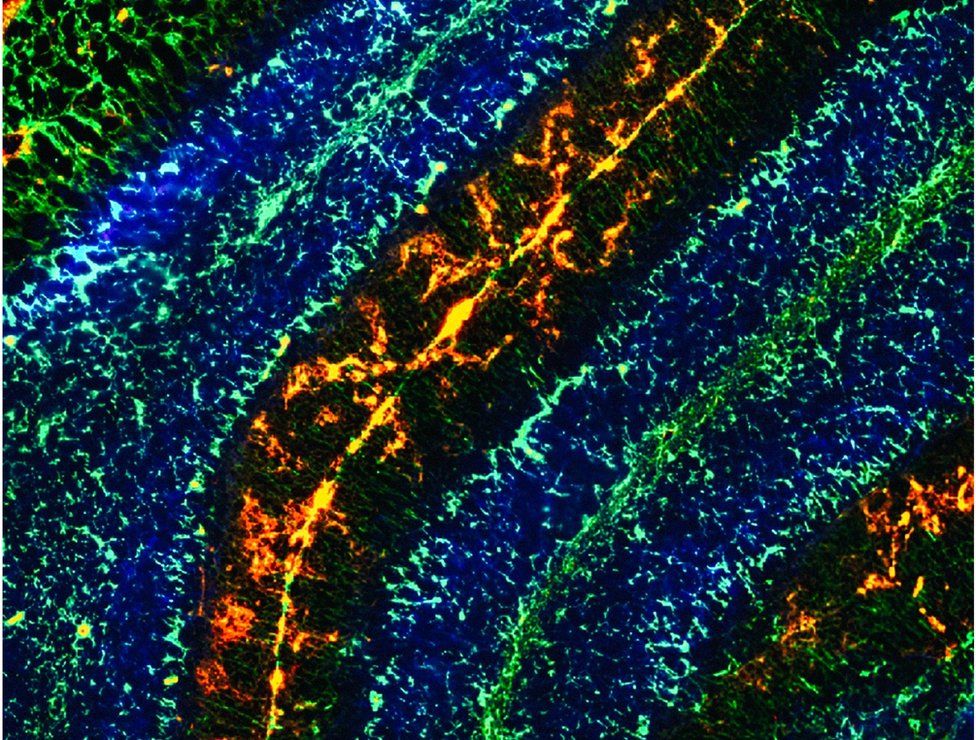
Our colorful research on the BBC News: “Blood-Brain Barrier Rainbow”

26th December 2019
Our international patent application is published! WO2019243616
1st April 2021
Our research featured as best basic science article of April 2021 in the Journal of Nuclear Medicine

29th July 2021
[18F]LW223: A breakthrough TSPO PET radiotracer for detecting tissue inflammation video is published HERE

11th-14th June 2022
Editor’s Choice Award for the [18F]LW223 paper published in the Journal of Nuclear Medicine. Dr Mark MacAskill presented a summary of the work during the plenary session of SNMMI2022


Standardisation of preclinical PET/CT protocols across multiple research centres
Preclinical data generated by different imaging centres can be difficult to compare due to the lack of standardisation of PET/CT imaging parameters. This also impacts on the ability to translate preclinical findings to clinical trials. This study: (1) quantitatively assesses the variability of current preclinical PET/CT acquisition and reconstruction protocols routinely used across multiple centers and scanners; and (2) proposes acquisition and reconstruction PET/CT protocols for standardization of multi-center data, optimized for routine scanning in preclinical PET/CT laboratory.
Results from this research were published in the Journal of Nuclear Medicine and featured as top story of the October 2019 SmartBrief from the Society of Nuclear Medicine and Molecular Imaging (SNMMI).

 petiswonderful.org